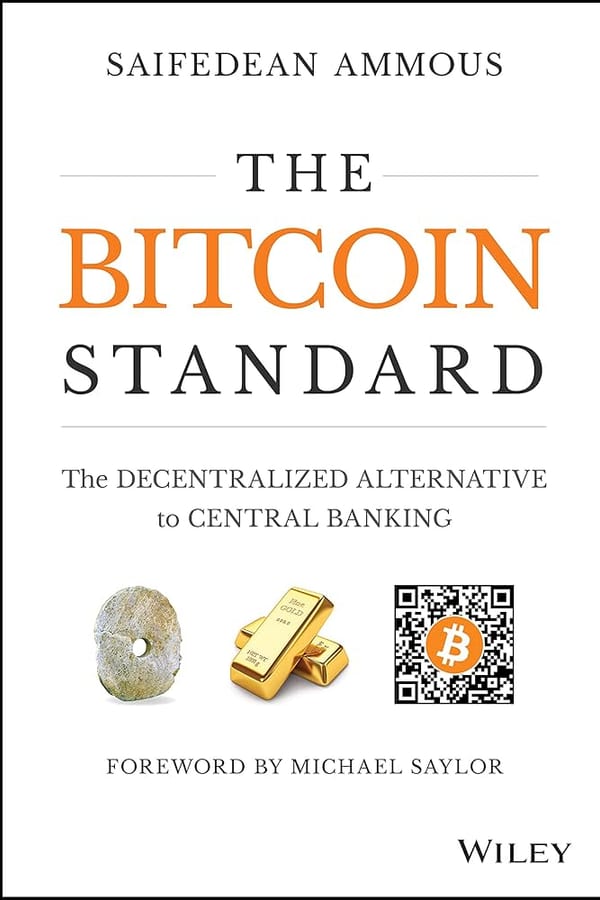
The Bitcoin Standard
by Saifedean Ammous
This is a real Premium analysis — the exact report ProofBooks generates for your manuscript. Scroll to see every section.
Premium Analysis
Elite deep-dive — full manuscript
The Bitcoin Standard is the book that gave the Bitcoin movement its intellectual spine. Its first half — a genuinely excellent economic history of money organized around the single concept of 'hardness' — is trade-nonfiction of the highest order. Its second half narrows into Austrian-school polemic: a bracing, sometimes brilliant, sometimes condescending argument that fiat money and Keynesian economics are civilizational mistakes. Craft is strong where it explains and weaker where it dismisses. Commercially it is a proven phenomenon — a passionate, self-replicating audience that treats the book as scripture. Acquire it for the thesis and the fervor; edit it for the tone.
Executive Editor Summary
The Bitcoin Standard is a category-defining title with an unusually devoted, self-marketing readership. Its first two-thirds is genuinely excellent economic history; its final third is a polemic that trades breadth for fervor. For an acquiring editor the commercial case is near-automatic — the harder questions are editorial: how much to temper the contested claims and the condescension without diluting the conviction that sells it. This is a lead nonfiction title with a built-in movement behind it, and a known ceiling set by its own partisanship.
“A sweeping economic history that reframes all of monetary history as a search for 'hard money' — and argues that Bitcoin, the hardest money ever created, is the natural endpoint of that search.”
Craft Scores
60% weight
Market Scores
40% weight
| Summary | Note | ||
|---|---|---|---|
| Ch. 1: Money | Money as a technology defined by 'salability' and 'hardness' — the framework the entire book runs on. | The conceptual foundation. If a reader buys this chapter, they buy the book. | excellent |
| Ch. 3: Monetary Metals | Gold's rise as history's hardest money and the classical gold standard as a high-water mark of sound money. | The stock-to-flow argument doing its most persuasive, best-evidenced work. | excellent |
| Ch. 4: Government Money | The 1914–1971 unwinding of the gold standard into pure fiat, framed as the state seizing the printing press. | Compelling narrative, but where the boldest contested claims start to appear. | solid |
| Ch. 8: Digital Money | Bitcoin unveiled as the first digitally scarce, supply-capped, unforgeable money — the hardest ever created. | The payoff. The whole history retroactively becomes prologue to this reveal. | excellent |
| Ch. 10: Bitcoin Questions | Combative treatment of altcoins, 'blockchain not Bitcoin', and mainstream economics. | Where polemic overtakes analysis — the section that most divides readers. | needs work |
Tension climbs steadily as the noose of the 'hardness' argument tightens, peaking as Bitcoin is unveiled as the thesis's inevitable conclusion. It dips slightly in the closing polemic, where combativeness replaces the earlier explanatory suspense.
The book runs on righteous indignation — nostalgia for the gold standard, anger at fiat debasement, then triumphant conviction as Bitcoin arrives. That emotional arc is exactly why it recruits so hard, and exactly why undecided readers can feel lectured rather than persuaded.
Strengths
One unifying lens for all of monetary history
clarityOfPurpose'Hardness' (stock-to-flow) turns 5,000 years of money — shells, beads, cattle, gold, fiat, Bitcoin — into a single legible story. That portability is the engine of the book's word-of-mouth.
Economic history taught through story, not equation
originalityThe rai stones, aggry beads, and the classical gold standard are vivid, memorable parables. Ammous makes abstract monetary economics feel concrete and consequential.
A thesis a reader can carry and repeat
voiceAndStyle'Money that's easy to produce always fails; the hardest money wins.' It's a dinner-table idea that reframes inflation, saving, and the state — exactly the transferability that builds evangelists.
Weaknesses
Polemic overtakes analysis in the final act
structuralIntegrityThe closing chapters shift from explaining to dismissing — Keynesians, altcoins, and skeptics are ridiculed rather than refuted. It energizes the base but narrows the audience and weakens the argument's authority.
Confident claims outrun contested economics
depthAndSubstanceSweeping assertions — that deflation is benign, that the gold standard caused a civilizational golden age — are stated as settled when they are actively debated. Specialists read this as ideology presented as history.
Condescension costs the book undecided readers
readerEngagementThe tone assumes the reader already agrees, or is a fool for not doing so. Curious newcomers who could have been persuaded are instead lectured — a self-inflicted ceiling on reach and reader engagement.
Readability & Composition
13
Grade Level
Literary
The book that gave Bitcoin its economics — a 5,000-year history of money, and why the hardest money always wins.
From seashells to gold to fiat to Bitcoin, The Bitcoin Standard tells the history of money as a single idea: that any money easy to produce is eventually destroyed, and the hardest money is the one that endures. Saifedean Ammous makes the case that Bitcoin is the hardest money ever created.
For thousands of years, humanity searched for money that could hold its value across time — and again and again, the money it chose was debased by whoever could produce more of it. Seashells, glass beads, cattle, and finally gold each rose and fell on a single property: hardness. In The Bitcoin Standard, economist Saifedean Ammous retells the whole history of money through this lens, argues that the abandonment of sound money in the twentieth century reshaped society toward debt and short-term thinking, and makes the provocative case that Bitcoin — digitally scarce, supply-capped, and beyond the reach of any state — is the hardest money ever devised, and the natural endpoint of money's long evolution.
Amazon Browse Categories
Dear [Agent/Editor],
Every money in history — shells, beads, cattle, gold — was eventually destroyed by whoever could produce more of it. Bitcoin is the first money in 5,000 years that no one can debase.
The Bitcoin Standard is a narrative economic history of money organized around a single concept: 'hardness', the difficulty of producing new supply. It traces money from primitive commodities through gold and the classical gold standard to the twentieth-century collapse into fiat, then argues that Bitcoin — digitally scarce and supply-capped at 21 million — is the hardest money ever created and the logical endpoint of monetary evolution. It closes with an Austrian-economics critique of central banking and a reframing of Bitcoin as sound money for the digital age.
[Author bio: [Author bio — credentials in economics, academic and institutional affiliations, platform within the Bitcoin and Austrian-economics communities]]
The complete manuscript is available on request. Thank you for your consideration.
Recommended Publishers
Temper the polemical tone — rewrite ad hominem passages as steelmanned rebuttals
Flag contested empirical claims as debated rather than settled
Add a glossary and plain-language recaps to the theory-heavy chapters
Total: 4–6 weeks
Amazon Product Description
**The book that gave Bitcoin its economics.** When a currency loses its ability to be produced cheaply, it becomes money — and when someone finds a way to produce it cheaply again, that money dies. **The Bitcoin Standard** retells the entire history of money through this single idea: seashells, glass beads, cattle, salt, and finally gold each rose and fell on one property — *hardness*. Economist Saifedean Ammous shows how the twentieth-century abandonment of sound money reshaped society toward debt, inflation, and short-term thinking, and makes the provocative case that Bitcoin — digitally scarce, supply-capped at 21 million, and beyond the reach of any government — is the hardest money ever created. Part economic history, part manifesto, this is the intellectual foundation of the Bitcoin movement: a bold, rigorous, and fiercely argued investigation into what money is, why it matters, and where it is heading.
Content Advisory
Age Rating
16+ (general adult; assumes some economic literacy)
Themes
The anti-central-bank and libertarian framing is politically charged in some markets. Contested economic claims should be clearly attributed as the author's position to avoid presenting a partisan thesis as settled consensus.
Next Steps
Rewrite the final-act dismissals of critics and altcoins as fair-minded, steelmanned rebuttals.
Add attribution ('the author argues…') to the boldest contested economic claims.
Insert a glossary and plain-language recaps for the theory-heavy chapters.
Strong and partly realized — the author has already extended the franchise (The Fiat Standard, Principles of Economics), and the 'X Standard' brand is a durable series engine.
Ready for submission
medium riskMarket Risk: medium
!Crypto-price cycles swing mainstream interest sharply up and down
!Partisan, occasionally condescending tone alienates undecided and mainstream readers
!Contested economic claims expose the book to sustained expert criticism
+The 'sound money' thesis is decoupled enough from price to survive bear markets
+Lean into the devoted base — the polarization is also the marketing engine
+A lightly editioned 'general reader' version could widen reach without diluting the core
Your book deserves this analysis
Get a Premium ProofIntelligence report for your own manuscript — and protect it with tamper-proof timestamps that prove your authorship forever.
Free plan available. No credit card required.