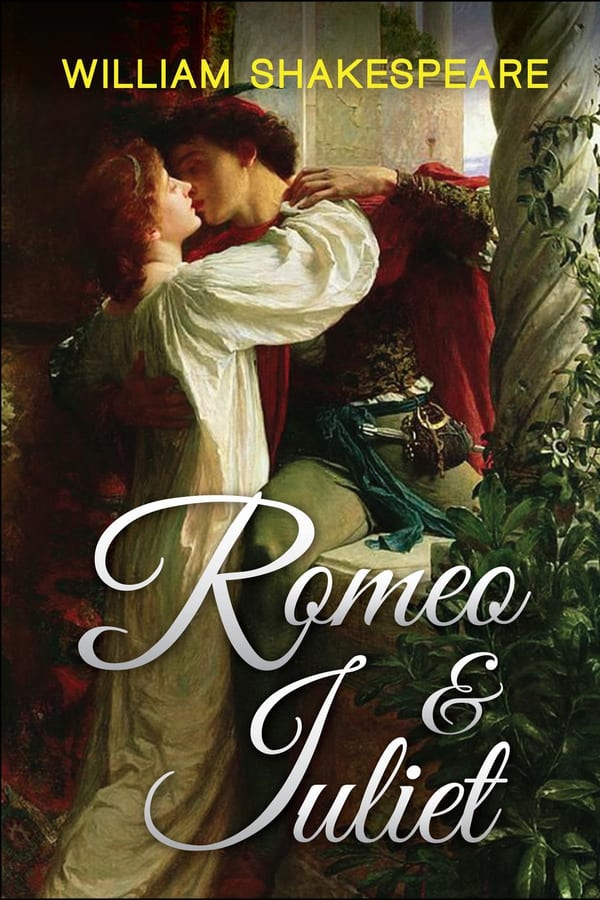
Romeo and Juliet
by William Shakespeare
This is a real Premium analysis — the exact report ProofBooks generates for your manuscript. Scroll to see every section.
Premium Analysis
Elite deep-dive — full manuscript
Romeo and Juliet is the foundational tragedy of young love — a five-act machine in which two teenagers meet, marry, and die inside four days while an ancient blood-feud burns around them. Its craft is exceptional at the level of verse, structure, and the invention of interiority through language; its most-cited weaknesses are the melodramatic haste of its final act and the thinness of secondary motivation (why exactly do the Montagues and Capulets hate each other?). As a commercial and cultural proposition it is not merely viable but perpetual — the most performed, adapted, and quoted play in the language.
Executive Editor Summary
Romeo and Juliet is the rare work that is simultaneously a syllabus fixture, a box-office property, and a phrase-book the whole culture quotes without knowing the source. Its craft ceiling is set by the verse and the genre-turn at Mercutio's death; its floor is set by the melodramatic compression of the finale. For any acquiring editor this is an automatic yes — the only real decisions are edition, apparatus, and how to frame Juliet's age for a contemporary readership, not whether it will endure.
“Two teenagers from feuding families fall in love at first sight, marry in secret within a day, and destroy themselves within four — until their deaths finally end the feud that made their love impossible.”
Craft Scores
60% weight
Market Scores
40% weight
| Summary | Note | ||
|---|---|---|---|
| Ch. 1: Act I — The Feast | Prologue-sonnet, street brawl, and Romeo's first sight of Juliet at the Capulet ball, sealed with a shared sonnet and a first kiss. | The most elegant setup in the canon — the ending is spoiled, so every scene runs on how, not whether. | excellent |
| Ch. 2: Act II — The Balcony | The lovers vow themselves to each other under Juliet's window; Friar Laurence agrees to marry them to end the feud. | The lyrical peak of the play and of English romantic verse. 'Juliet is the sun' lives here. | excellent |
| Ch. 3: Act III — The Duel | Tybalt kills Mercutio; Romeo kills Tybalt and is banished. The play changes genre in a single hot afternoon. | The structural hinge. 'A plague o' both your houses!' — the exact line where comedy becomes tragedy. | excellent |
| Ch. 4: Act IV — The Draught | Cornered into marrying Paris, Juliet drinks the friar's potion to feign death and buy time for Romeo. | Juliet's bravest, loneliest scene — but the plot mechanism (feigned death, timed letter) starts to creak here. | solid |
| Ch. 5: Act V — The Tomb | The letter fails; Romeo poisons himself beside Juliet, who wakes, finds him dead, and stabs herself. The feud ends over their bodies. | Shattering in performance, contrived on the page — the finale that most divides readers and critics. | solid |
Tension climbs in two waves: a slow romantic build broken by the mid-play double killing, then a relentless mechanical acceleration toward the tomb. The one dip — the secret-marriage lull — is the last moment of hope before the trap closes, and it is placed exactly where it does the most damage.
The emotional shape is a deliberate cruelty: the play lifts the audience to the giddiest romantic high in the canon precisely so the fall costs more. The higher the balcony scene flies, the harder the tomb lands — the structure manufactures grief by first manufacturing joy.
Strengths
Verse that invented how love sounds in English
voiceAndStyleFrom the shared first-meeting sonnet to the balcony's 'Juliet is the sun', the play doesn't describe love so much as build a new language for it. Phrases minted here — 'star-cross'd', 'wherefore art thou', 'a rose by any other name' — became the culture's default vocabulary for romance.
A structure that changes genre in one scene
structuralIntegrityMercutio's death converts a comedy of courtship into a tragedy of consequence in a single afternoon. The pivot is so cleanly engineered that you can name the exact line where hope becomes doom — a masterclass in dramatic architecture.
Juliet — a fully-realized heroine ahead of her era
depthAndSubstanceA thirteen-year-old who out-reasons and out-dares every adult around her, proposing marriage, defying her father, and facing the draught alone. Her interiority and agency are the play's deepest and most modern achievement.
Weaknesses
The catastrophe turns on mischance, not character
structuralIntegrityThe ending hinges on an undelivered letter and a few seconds' mistiming at the tomb. It is devastating as fate but contrived as plot — the tragedy is sprung by accident rather than earned by the characters' flaws, which some readers find melodramatic.
Motiveless feud, thin secondary characters
depthAndSubstanceThe 'ancient grudge' driving everything is deliberately unexplained, and figures like Paris and Benvolio stay functional rather than alive. The play's engine and several of its parts run on convention rather than fully-built motivation.
Compressed haste strains belief
readerEngagementMeeting to double-suicide inside roughly four days is the source of the play's velocity and also its most common criticism: the speed that makes the love feel fated can also make it feel adolescent and under-tested.
Readability & Composition
10
Grade Level
General Adult
96%
Dialogue
4%
Narration
The greatest love story ever told, and the fastest — four days from first kiss to the tomb.
Two teenagers from feuding families fall in love at first sight, marry in secret, and die within four days — and only their deaths can end the ancient hatred that made their love impossible. The play that taught the world how love sounds.
In fair Verona, two great houses nurse an ancient grudge no one can remember the start of. When Romeo, a Montague, crashes a Capulet feast and meets Juliet, they fall in love in the space of a sonnet — and marry the next day. But a single afternoon of street violence turns their romance to catastrophe, and a mistimed message sends each to die believing the other already dead. Written in verse of unmatched beauty and structured with the precision of a trap, Romeo and Juliet is the story every love story since has answered to: the definition, and the warning, of love that will not wait.
Amazon Browse Categories
Dear [Agent/Editor],
Two teenagers meet, marry, and die inside four days — and their families only stop killing each other once the children are dead.
Romeo and Juliet is a five-act verse tragedy set in feuding Verona. Romeo Montague and Juliet Capulet fall in love at a masked ball, marry in secret through Friar Laurence, and are undone when a street duel kills Romeo's friend Mercutio, Romeo kills Juliet's cousin Tybalt, and he is banished. A desperate plan — Juliet feigning death by a sleeping draught — collapses when the friar's letter fails to reach Romeo, who kills himself at her tomb moments before she wakes to do the same. The lovers' deaths finally reconcile the two houses.
[Author bio: [Author bio — theatrical credits, prior published plays, and standing in the London playhouse scene]]
The complete text is available on request. Thank you for your consideration.
Recommended Publishers
Editorial apparatus — glosses, textual notes, and staging history for a premium annotated edition (accessibility)
Front-matter framing of Juliet's age and the feud's origin for modern audiences
Performance-first reading order and facing-page modern paraphrase for the dense early acts
Total: 6–7 weeks (edition production, not text revision)
Amazon Product Description
**'A pair of star-cross'd lovers take their life.'** In fair Verona, two feuding families — the Montagues and the Capulets — have nursed an ancient grudge for so long that no one remembers how it began. When young Romeo Montague slips into a Capulet feast and meets Juliet, they fall in love in the space of a single sonnet and marry in secret the very next day. But a street brawl turns their romance to ruin: Mercutio is slain, Tybalt killed in revenge, Romeo banished — and a desperate plan to reunite the lovers collapses on a matter of seconds and an undelivered letter. **Romeo and Juliet** is the tragedy that taught the world how love sounds, written in verse of unmatched beauty and built like a trap that closes in four short days. The most performed, quoted, and adapted play in the English language — and the definition of love that will not wait.
Content Advisory
Age Rating
13+ (standard secondary-school set text; suicide themes warrant classroom framing)
Themes
Trigger Warnings
Juliet's age and the double-suicide ending require thoughtful contextual framing in educational settings. Adaptations commonly raise the characters' ages.
Next Steps
Produce a premium annotated edition with facing-page glosses for the dense early acts.
Add front-matter framing of Juliet's age and the feud's deliberate motivelessness for modern readers.
Package the story for adaptation licensing — the highest-value use of a public-domain property.
Not sequel-shaped — the lovers die — but among the most 'franchised' stories in existence through adaptation rather than continuation.
Ready for submission
low riskMarket Risk: low
!Ubiquity flattens differentiation — competing against every prior edition and adaptation
!Juliet's age (thirteen) requires careful framing for modern classrooms and audiences
!Early Modern English is a barrier for casual readers on the page
+Compete on apparatus, translation quality, and staging history rather than on the text itself
+Editorial front matter and adaptation choices that address the age question directly
+Facing-page modern glosses and performance-first framing to lower the language barrier
Your book deserves this analysis
Get a Premium ProofIntelligence report for your own manuscript — and protect it with tamper-proof timestamps that prove your authorship forever.
Free plan available. No credit card required.